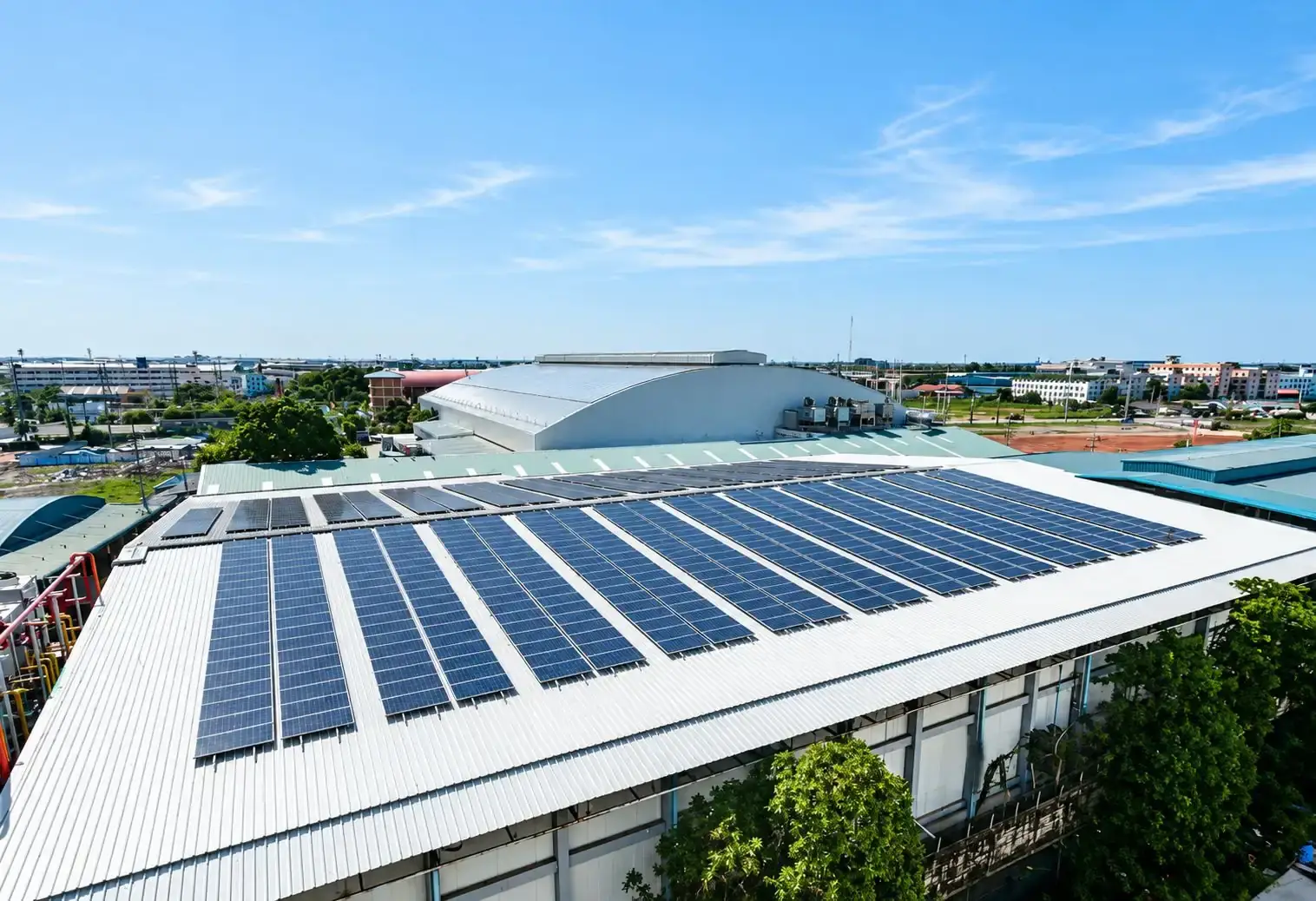


Solar panels generate most of their electricity in the middle of the day, exactly when many households have left for work or school and using very little power. Solar battery storage solves that mismatch. It captures the electricity your panels produce but do not use straight away, holds it, and releases it later when demand rises again in the evening. For UK homeowners facing rising electricity prices and increasingly flexible energy tariffs, this ability to shift when solar power gets used has become one of the most relevant upgrades for an existing solar PV system.
Solar battery storage is a system that stores surplus electricity generated by solar panels for use later, instead of exporting it to the grid immediately. A battery, inverter and management system work together to capture, hold and release this stored energy, helping households use more of their own solar generation and rely less on imported grid electricity.
What Is Solar Battery Storage?
A solar battery sits between your solar panels, your home’s wiring and the electricity grid. During the day, if your panels produce more electricity than the house is using, that spare power would normally flow straight out to the grid. With home battery storage added, it is diverted into the battery instead, ready for later use.
Solar panel battery storage does not change how panels generate electricity. It changes what happens to that electricity once it is made, adding a third option beyond “use it now” or “export it now”: store it, then use it a few hours later, when most households actually draw the bulk of their daily electricity.
Solar panels and battery storage work as a pair rather than separate systems. The panels remain the source of the electricity, the inverter converts it into a usable form, and the battery decides when it gets consumed. The grid still plays a role throughout, topping up demand once stored energy runs low, and accepting exported surplus once the battery is full.
How Does Solar Battery Storage Work?
Solar panels generate direct current electricity during daylight, with output rising through the morning, peaking around midday, and falling away in the afternoon. This electricity first meets whatever the household is using in real time, powering appliances and lighting directly.
Once household demand is met, leftover electricity is genuine surplus. Instead of exporting it immediately, the system diverts it to charge the battery. As solar generation drops later in the day, and household demand typically rises, the battery discharges automatically into the home’s circuits.
If the battery runs low and consumption exceeds what it can supply, the system imports the remainder from the grid. If the battery is full and panels are still generating surplus, that extra electricity is exported. This sequence, generate, use, store, discharge, then import or export as needed, is what makes solar battery storage a genuine energy-timing tool rather than a simple add-on.
How Do Solar Panels Work With Battery Storage?
Solar panels produce direct current electricity, which needs converting before use in a UK home. A standard solar inverter handles that conversion for panels alone, but a hybrid inverter goes further, managing power flow between the panels, the battery, the household’s circuits, and often the grid connection too.
Solar panel battery storage systems typically use one of two arrangements. A DC-coupled system places the battery on the direct-current side of a single hybrid inverter, alongside the panels, often more efficient because electricity is converted fewer times. An AC-coupled system gives the battery its own separate inverter connected closer to the home’s existing wiring, often simpler to retrofit onto a system already installed.
In either arrangement, the inverter continuously balances four things: solar generation, household demand, battery charge, and the grid connection. Solar panels and battery storage only deliver full value when this balancing happens correctly.
Key Components of a Solar Battery Storage System
A complete system is made up of several parts working together.
Solar Batteries
Solar batteries hold electricity chemically until needed. Capacity is described in kilowatt-hours, representing how much energy the battery can hold, while a separate power rating describes how quickly it can deliver that energy. Most domestic batteries installed in the UK today use lithium-based chemistries.
Hybrid Inverter
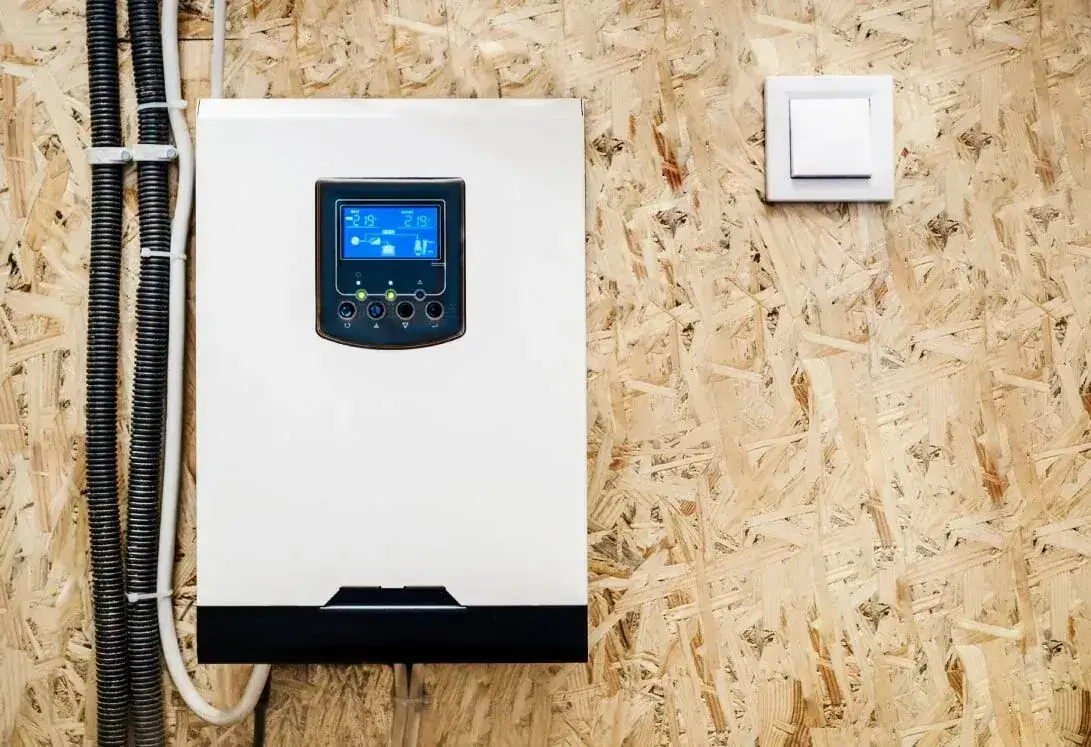
The hybrid inverter moves power between the panels, battery, home and grid, converting direct current into the alternating current appliances use, and deciding, moment to moment, if the battery should charge, discharge, import or export. Correct sizing and configuration has a direct effect on how efficiently the system performs, and our team can assess existing solar inverters as part of a battery consultation. For more on what a solar inverter does and how it works, our existing guide covers this in more depth.
Battery Management System
Every reputable domestic battery includes a BMS, monitoring individual cells, managing temperature to prevent overheating, controlling charge and discharge behaviour, and stepping in if a fault is detected. This is core to why modern lithium-based storage is as safe as it is, and it operates automatically.
Smart Meter and Energy Monitoring
Most systems pair with a smart meter and a monitoring app, giving homeowners visibility over solar generation, household consumption, battery charge, and grid import and export. This does not change how the system operates, but it helps homeowners spot early signs of a fault, such as a battery that stops charging fully.
Types of Solar Batteries
Domestic solar storage in the UK is dominated by lithium-based chemistries, though the specific type affects safety, lifespan and everyday behaviour.
Lithium Ion Solar Batteries
Lithium ion solar battery technology became standard for home storage because of its relatively high energy density, packing more capacity into a smaller, lighter unit than older battery types. Lithium-ion batteries are generally efficient across charging and discharging, suiting the frequent daily cycles a solar-linked battery goes through.
Lithium Iron Phosphate Batteries
Within the lithium-ion family, lithium iron phosphate, commonly written as LiFePO4, has become the dominant chemistry in new UK installations. It is generally regarded as more thermally stable than older lithium-ion formulations, reducing thermal runaway risk, and tends to support a higher number of charge cycles before capacity noticeably declines. Exact cycle life and warranty figures vary by manufacturer, so these are worth checking against the specific product’s own documentation.
Other Battery Technologies
Older lead-acid batteries still appear in some off-grid or budget installations, but offer lower usable capacity relative to their size, a shorter working life, and more demanding maintenance. Flow batteries and other emerging chemistries exist mostly on a commercial scale and are not yet mainstream for a typical home. Among the types of solar batteries available today, LiFePO4 is the most common recommendation for new installations.
How Big Should a Solar Battery Be?
There is no single correct size. The right answer depends on how much electricity the household uses, particularly in the evening and overnight; how much the solar array generates on an average day; how much surplus is typically available to charge the battery; and what the homeowner wants the system to achieve.
A battery sized well below evening and overnight usage runs out of stored charge before it is genuinely needed. One sized far beyond what the array can reliably charge spends much of the year only partially full, adding cost without proportional benefit. How big are solar storage batteries in practice varies, but many UK homes settle in the 5kWh to 13.5kWh usable capacity range, depending on household size and consumption. A household planning an electric vehicle charger or a heat pump typically needs meaningfully more capacity, since both add substantial and fairly predictable daily demand. The battery’s power rating matters too, determining how many appliances it can support running simultaneously. A bigger battery is only the better choice when the extra capacity actually gets used.
What Is Depth of Discharge?
Depth of discharge, shortened to DoD, describes how much of a battery’s total capacity can safely be used before recharging. Batteries are not designed to run down to zero, because doing so repeatedly accelerates degradation. Manufacturers set a recommended DoD, and the portion of capacity outside that limit is effectively reserved.
This is why headline capacity and usable kWh capacity often differ. A battery advertised with 10kWh total capacity but a 90 percent recommended DoD offers around 9kWh of genuinely usable energy. A household drawing 4kWh overnight from a battery with 5kWh usable capacity leaves a small buffer rather than running the unit flat. Usable capacity, not the larger total figure often used in marketing, is what actually determines how much electricity a household can use.
How Long Do Solar Batteries Last?
How long do solar batteries last is one of the most common questions homeowners ask, and the honest answer depends on several interacting factors rather than a single fixed number.
Cycle life, the number of full charge-discharge cycles a battery completes before capacity noticeably declines, is set by the manufacturer for each model, and modern LiFePO4 batteries generally offer a longer cycle life than older lithium-ion formulations. Usage patterns matter too: a battery regularly discharged close to its DoD limit typically degrades faster than one used more conservatively, and temperature plays a role, with batteries kept cool and well-ventilated tending to age more slowly.
Manufacturer warranties are the most reliable practical guide to expected working life, since most publish a guaranteed minimum retained capacity by the end of the warranty period rather than promising a fixed number of years. Rather than promising a fixed lifespan here, it is worth checking the specific warranty and cycle-life figures for the battery under consideration.
Solar Battery Storage Cost
Solar battery storage cost is shaped by several factors rather than capacity alone, which is why two batteries with similar kWh figures can be priced quite differently. Battery chemistry and build quality affect price, and the inverter requirement matters too: a household needing a new hybrid inverter alongside the battery faces a larger project than one adding an AC-coupled battery to an inverter that already supports it. Installation complexity varies by property, covering electrical work, cable routing, and any DNO notification process.
The condition of the existing solar PV system also affects cost, since a straightforward retrofit is generally more contained than one requiring inverter replacement or significant rewiring. Monitoring equipment, brand and warranty length all factor into the final price too. Because pricing varies by property and current market conditions, a proper site assessment is worth more than a generic online estimate, and Solar Maintenance and Repairs’ battery storage service provides exactly that before recommending a specific system.
Can You Add Battery Storage to Existing Solar Panels?
For many homeowners, the more immediate question is not installing panels and a battery together, but adding a battery to a system that already exists. In most cases this is achievable, though the right approach depends on what is already installed.
Battery storage for solar panels already fitted usually takes one of two routes. An AC-coupled retrofit adds a battery with its own separate inverter, connecting into the home’s existing wiring independently of the original solar inverter, generally the more straightforward option. Alternatively, where the original inverter is due for renewal anyway, replacing it with a hybrid inverter supporting a DC-coupled battery can be a more efficient long-term option, combining two jobs into one. Compatibility depends on the specifics of the existing inverter, its age and manufacturer, so a blanket compatibility claim is unhelpful; it genuinely depends on the installation being assessed. Solar Maintenance and Repairs’ existing solar PV installation service includes assessing this before recommending AC-coupled or DC-coupled options.
Can You Have Battery Storage Without Solar Panels?
Battery storage does not strictly require solar panels, though the case for it changes without them. Can you have battery storage without solar is a genuine question for households on a time-of-use tariff who want to shift consumption to cheaper periods.
In this configuration, the battery charges directly from the grid during an off-peak window, on a tariff such as Octopus Agile or a similar time-of-use product, and discharges during the more expensive peak-rate periods that follow. How well this suits a property depends on the specific tariff available, the size of the gap between off-peak and peak pricing, and how much electricity the household uses during peak windows. Tariff structures change over time, so this is not a guaranteed saving, and current terms are worth checking carefully rather than assuming a fixed price gap.
Is Solar Battery Storage Worth It in the UK?
Is solar battery storage worth it UK homeowners ask this more than almost any other question, and a fair answer weighs several things against each other.
On the benefit side, battery storage increases self-consumption, so more of the electricity your own panels generate gets used in the home rather than exported for a lower return. It reduces reliance on grid electricity during expensive evening periods, and on a time-of-use tariff it can also support charging from cheap off-peak grid electricity alongside solar charging.
On the cost side, the upfront investment is real, and needs weighing against household consumption, current export payment rates, and how long the battery remains effective before performance declines. Households with higher-than-average evening electricity use, an electric vehicle, or a genuinely favourable time-of-use tariff tend to see a stronger case. Because tariffs, export rates and equipment prices all change over time, this article does not promise a specific saving or payback period. Solar battery storage UK adoption has grown because, for the right household profile, the case genuinely stacks up, though it is not automatically right for every property.
Best Solar Battery Storage Options in the UK
Rather than naming a single winner, it is more useful to explain how to compare systems properly, since the best solar battery storage UK option depends on the property and the household’s goals.
Usable capacity, not headline total capacity, should be the first figure compared, since it reflects what a household can actually draw on day to day. Power output determines how many appliances the battery can support running simultaneously. Battery chemistry affects safety and expected cycle life, with LiFePO4 currently the most commonly specified choice. Warranty terms and guaranteed retained capacity by the end of the warranty period give a more honest sense of expected longevity than marketing claims alone. Inverter compatibility should be checked against the existing or planned solar PV system, and installation requirements, including where the unit can be sited under current fire-safety guidance, round out a sensible comparison. No single manufacturer is objectively best for every property.
Solar Battery Storage and UK Energy Tariffs
Electricity tariffs increasingly shape how a battery is used day to day. Under a standard flat-rate tariff, a battery mostly charges from surplus solar generation and discharges to cover evening demand. Under a time-of-use tariff, the picture becomes more dynamic, with different prices across the day, typically cheaper overnight and more expensive during peak-demand windows. A battery on this kind of tariff can charge from solar during the day, top up from the grid during a cheap off-peak window, then discharge during the peak period regardless of solar availability. Some tariffs, such as Octopus Agile, price electricity on a granular, half-hourly basis linked to wholesale market conditions.
Exporting surplus solar electricity remains part of the picture too, and export payment rates vary by supplier. Tariff optimisation can improve overall system value, but because tariffs and rates change over time, this article makes no guaranteed savings claim tied to any specific tariff. Checking current terms directly with an energy supplier is the most reliable way to understand what a particular tariff means for a specific household.
UK Solar Battery Storage Regulations and Standards
UK battery installations sit within a defined regulatory framework, and a professional installer works within it as a matter of course. Grid connection requirements are set out in Engineering Recommendations from the Energy Networks Association. Smaller systems up to a defined capacity threshold follow a simpler notify-after-installation process known as G98, while larger systems above that threshold require formal Distribution Network Operator approval under G99. Which category applies depends on the combined capacity of the inverter equipment involved, and a qualified installer assesses this as part of the project.
Electrical safety standards, principally BS 7671 wiring regulations, govern how a battery is wired and protected, and current fire-safety guidance affects where it can be sited, generally steering new installations away from lofts and similarly enclosed spaces. Specific requirements depend on system size, and a competent installer confirms what applies before work begins. Related property-level rules, such as planning permission for solar panels, are also worth checking alongside the electrical requirements above.
Benefits of Solar Battery Storage
Used appropriately, battery storage delivers real practical benefits. It increases self-consumption, allowing more of a household’s own solar generation to be used rather than exported for a lower return, and makes better use of surplus solar energy that would otherwise be exported the moment it is produced. It reduces reliance on grid electricity during expensive periods, and where a suitable time-of-use tariff is available, it can support further tariff optimisation on top of the solar-linked saving.
Beyond electricity cost, a battery system gives homeowners clearer visibility of household energy use through its monitoring system, often revealing usage patterns that were previously invisible. For households with or planning an electric vehicle, a sufficiently sized battery can support smarter EV charging, and for any home with existing solar PV, storage is generally the most direct way to get more value from panels already generating electricity. None of these benefits is guaranteed to translate into a specific financial figure, since that depends on the individual property, but they are genuine, well-established mechanisms through which battery storage adds value.
Limitations and Considerations
A balanced view of battery storage has to include its limitations, and a good installer raises these proactively. Upfront cost remains the most obvious constraint, and needs weighing honestly against actual electricity usage, not a generic industry average. Battery degradation is real and gradual: even a well-specified system retains somewhat less usable capacity after several years than when new, which is why warranty terms matter. Space requirements are a practical constraint too, since a battery needs a suitable, ventilated location, and current fire-safety guidance restricts where new installations can be sited.
System compatibility can complicate a retrofit onto an older or unusual solar PV setup, sometimes requiring inverter replacement. Tariff terms can change over time, and a system configured around today’s structure may need reconfiguring later. Ongoing maintenance is a genuine, if modest, commitment, covering firmware updates, ventilation checks and performance verification. Actual household energy usage, not the theoretical maximum a system could support, ultimately determines if a given battery size makes sense, and battery storage is not automatically suitable for every home.
Professional Solar Battery Storage Installation
Professional installation is less about convenience and more about getting a system that is correctly sized, safely wired, and properly registered from day one. A proper site assessment reviews electricity usage, solar PV generation, and the property’s electrical setup before any battery size or model is recommended, taking into account usable capacity, depth of discharge, and realistic future needs such as an EV charger or heat pump.
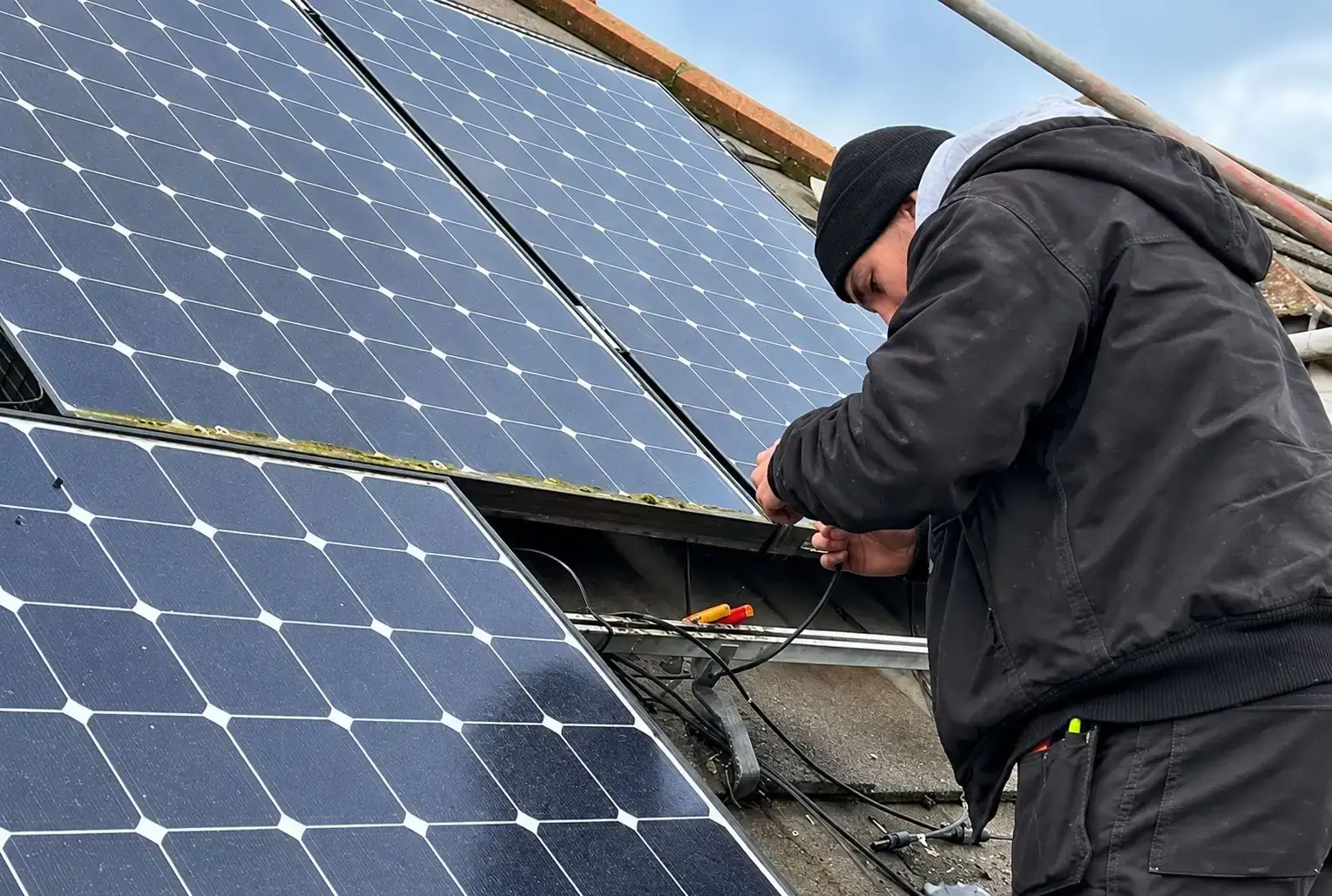
Compatibility with existing solar inverters, or a decision to replace one, needs assessing case by case, and electrical work must meet BS 7671 wiring standards and current fire-safety guidance on siting. Commissioning ensures the battery, inverter and monitoring system work together correctly, and grid connection compliance, a G98 notification or a full G99 application depending on the system, is handled as part of the project. Solar battery storage installation and repair carried out to this standard is the core of what a genuinely qualified installer offers, and as specialists in Solar PV and Storage Batteries, this is the approach Solar Maintenance and Repairs applies to every project, alongside related solar PV service and repair work and diagnosing inverter faults. For a sense of how long a comparable solar PV project takes, this step-by-step breakdown of solar panel installation is a useful reference point.
Solar Battery Storage Near Me
For homeowners searching for solar battery storage near me, the most useful first step is arranging a professional assessment rather than requesting a generic online quote. A proper assessment typically needs some basic information upfront: the address and rough age of the property, the make and age of any existing inverter, an idea of typical household electricity usage, and what the homeowner is hoping to achieve, from lower bills to backup power or making better use of an existing solar PV system.
Bringing this information to an initial conversation helps an installer give a more accurate, property-specific answer rather than a generic estimate. If common inverter faults and fixes are already a concern with an existing system, mentioning that upfront helps the installer plan the right kind of visit.
Solar Battery Storage Installation and Repair
Some homeowners need a brand new battery installation. Others need an assessment of an existing system that is underperforming, a suspected battery fault, an inverter issue affecting charging or discharging, a monitoring system that has stopped reporting correctly, or a battery that has reached the end of its useful life and needs replacing. Professional support makes a genuine difference in every one of these situations.
Solar Maintenance and Repairs works across all of these scenarios, from installation through to long-term servicing and repair, treating battery storage as a core part of getting proper value from a solar PV system rather than a separate add-on. For anyone deciding if battery storage makes sense for their property, or with a system that needs a proper look, book a free assessment and a member of the team will talk through what is actually achievable for the home before recommending anything. It is also possible to get in touch with the team directly with any questions ahead of booking.