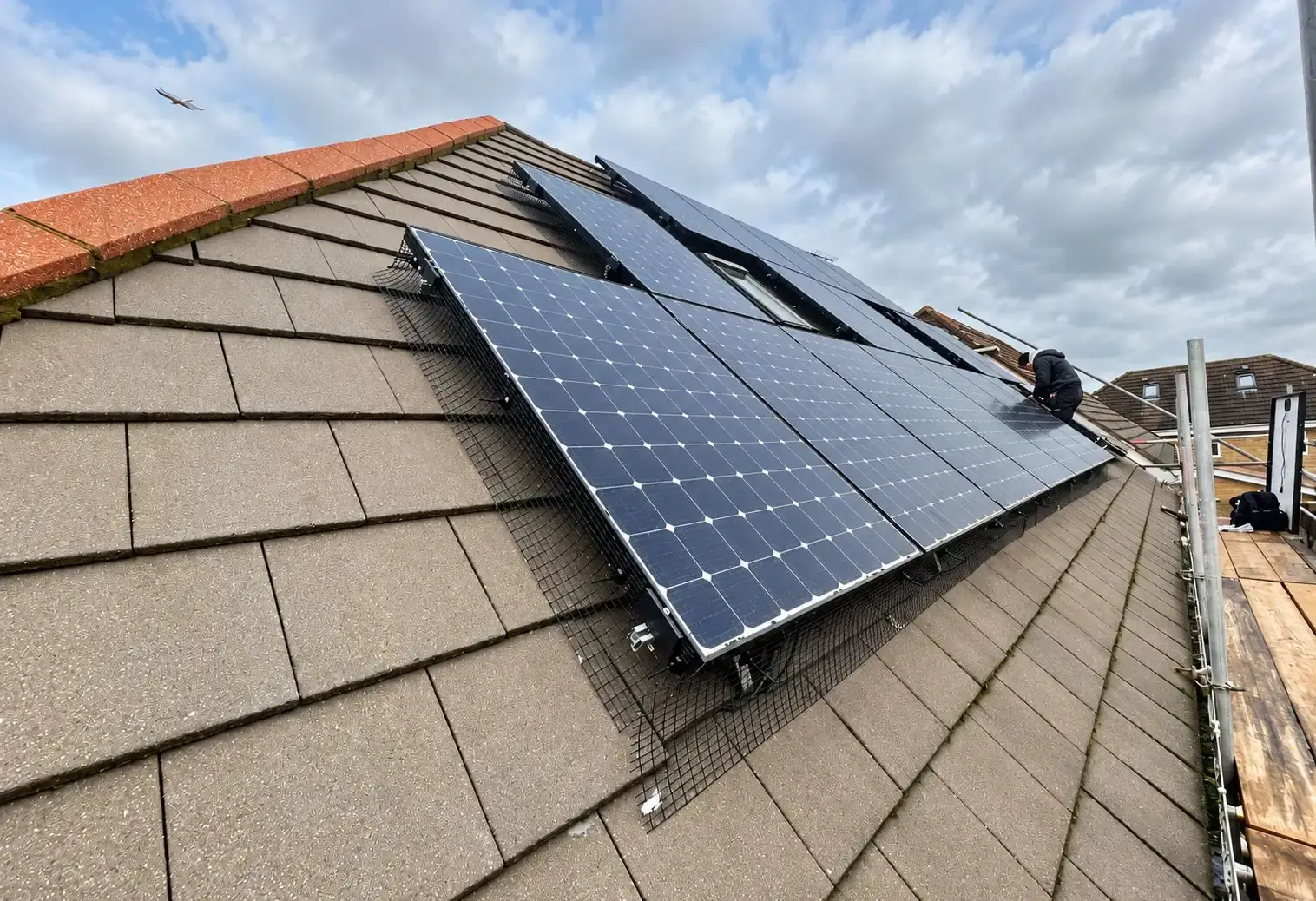
Do I need planning permission for solar panels? For most homes in the UK, the answer is no. Standard domestic rooftop installations usually fall under permitted development rights, which means you can install them without submitting a planning application to your council. That said, the solar panel rules UK homeowners need to follow do include some important exceptions, covering listed buildings, conservation areas, larger ground mounted systems, and certain commercial installations. This guide walks through exactly when permission is needed, when it isn’t, and what else you should check before work begins.
When Planning Permission Is Not Required
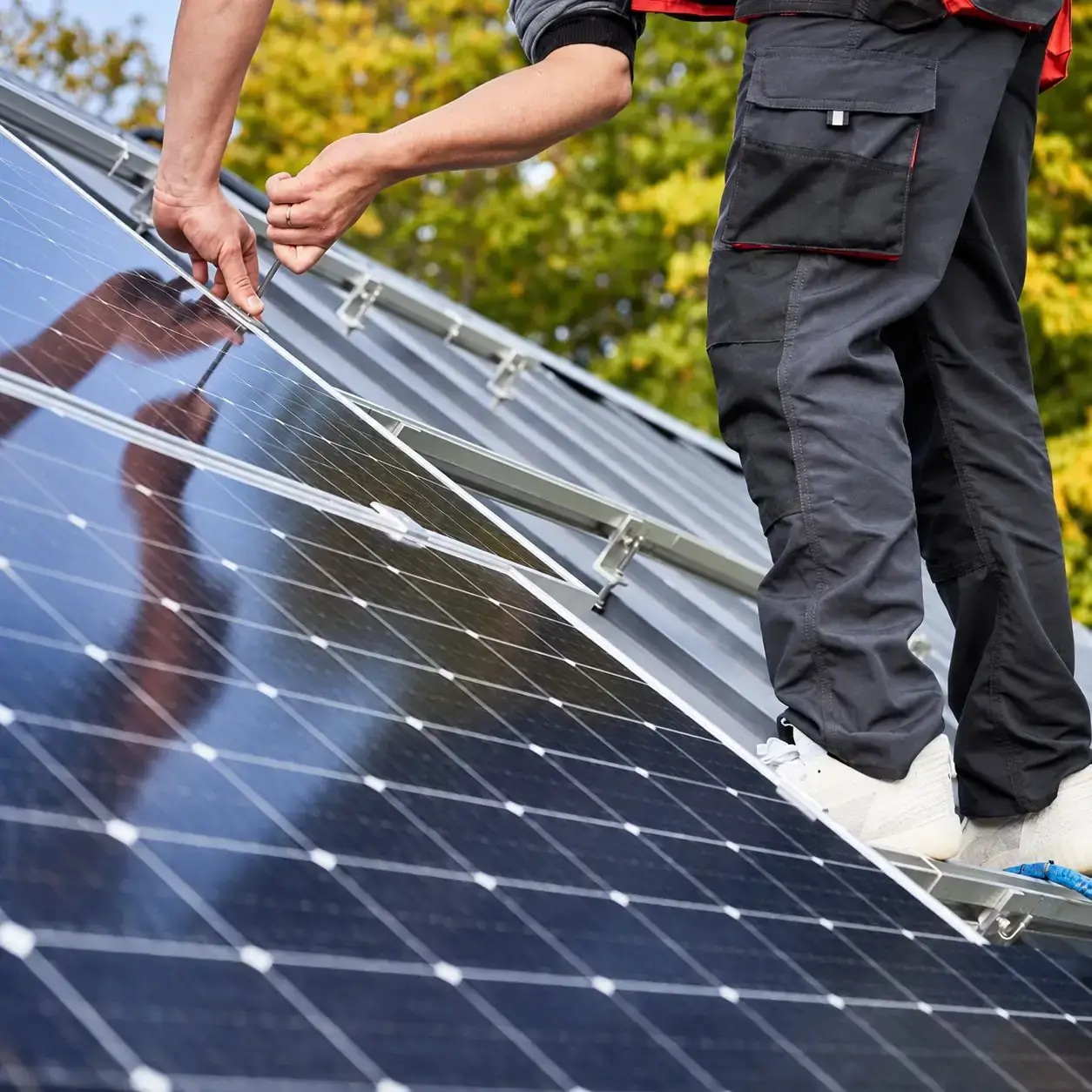
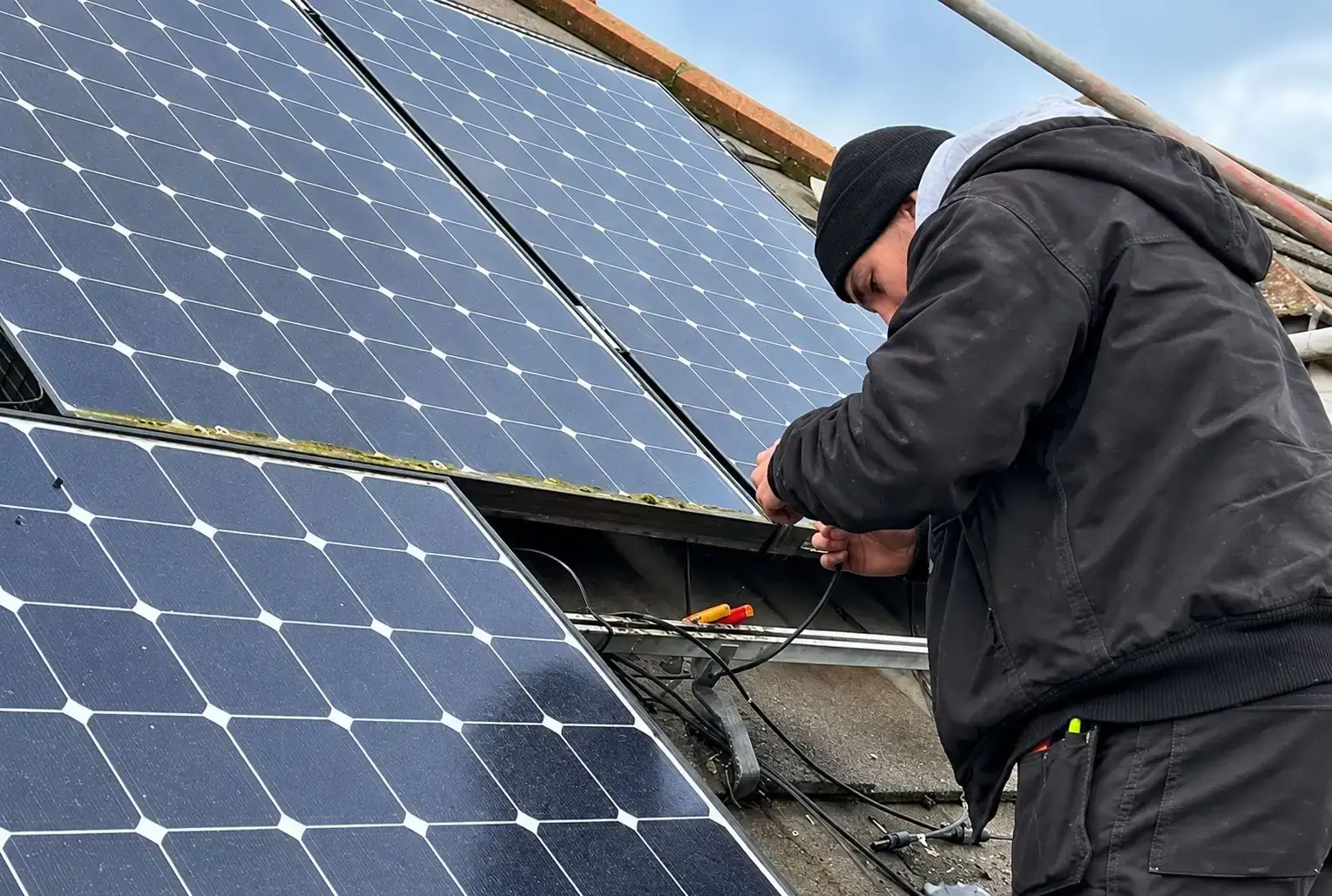
Permitted development rights exist so that straightforward, low impact home improvements, solar panels among them, don’t need a full planning application. For domestic rooftop solar, this falls under permitted development solar panels rules set out in Part 14 of the General Permitted Development Order, specifically permitted development rights (Class A). Provided your installation meets the standard conditions, you can go ahead without contacting your local planning authority for formal consent.
To qualify, panels generally need to sit close to the roof or wall surface rather than projecting out significantly, and the highest point of the equipment should not sit above the highest part of the roof, excluding the chimney. The installer should also position panels to keep their visual impact on the building and surrounding area as low as reasonably possible, and equipment should be removed once it’s no longer in use. Most semi-detached, detached and terraced houses across Hampshire and the wider South of England meet these conditions comfortably, which is why the vast majority of domestic solar projects proceed without any planning application at all. Our team talks through these conditions as part of our solar panel installation service, so you know exactly where your property stands before any work is booked in.
When Planning Permission Is Required
Permitted development rights cover most situations, but they don’t apply universally. A planning application becomes necessary in several specific circumstances. Listed buildings and scheduled monuments fall outside permitted development entirely, so any solar installation on these properties needs separate consent from the local authority. Conservation areas and World Heritage Sites carry their own restrictions too, particularly around wall mounted panels facing a highway. Some commercial and industrial buildings have reduced or removed permitted development rights depending on the property’s planning history. Unusual roof designs, including certain flat roofs and roofs where panels would sit above the ridge height, can also require prior approval or a full application. Larger ground mounted arrays, especially those exceeding the size and height limits set out later in this guide, move outside permitted development too. If your property already has an Article 4 direction in place, removing or restricting permitted development rights locally, a planning application may be required even for a project that would otherwise be exempt.
Solar Panels on Listed Buildings
If your home is a listed building, permitted development rights don’t apply, regardless of how discreet the installation would be. This means listed building consent is needed before any solar equipment is fitted, in addition to standard planning permission if that’s also required for the property. Heritage considerations sit at the centre of this process. Councils are weighing up how the panels would affect the historic character and appearance of the building, both up close and from wider public viewpoints. Solar panels listed building applications tend to have a better chance of success when panels are positioned on a rear roof slope, out of view from the street, and when the frames and cabling are designed to minimise alteration to the original fabric of the building. Every listed building is assessed individually, so early conversations with the conservation officer at your local planning authority are worthwhile before committing to a design.
Solar Panels in Conservation Areas
Conservation area restrictions add another layer of consideration, though they’re generally less restrictive than listed building rules. In most conservation areas, standard rooftop panels on the rear or a less visible part of the roof can still proceed under permitted development. Where issues tend to arise is with panels mounted directly onto a wall or roof slope that faces a road within the conservation area, since permitted development rights specifically exclude this scenario in these areas. Visual impact is the central concern for the local planning authority when solar panels conservation area cases do need an application. Choosing a discreet position, avoiding street facing elevations where practical, and using in-roof or slimline panel designs rather than bulky frames can all help a proposal meet the character expectations of a conservation area, whether or not a formal application ends up being required.
Flat Roof Solar Panels
Flat roofs need a slightly different approach to installation, since panels are usually mounted on angled frames to achieve an efficient tilt rather than sitting flush against the surface. This raises solar panel height restrictions as a relevant factor for flat roof installation projects, particularly the solar panel planning permission flat roof rules covering how far the equipment can project above the roofline. Current guidance allows a greater permitted height for flat roof installations than for panels fixed directly to a pitched roof, reflecting the fact that some elevation is often unavoidable with this mounting style. Flat roof height and boundary rules also come into play in conservation areas, National Parks, Areas of Outstanding Natural Beauty and World Heritage Sites, where flat roof solar installations may need prior approval from the local authority even if a similar pitched roof system would not. Regardless of the specific height limit that applies, a structural check is always worth arranging on a flat roof, since the racking and ballast used for angled mounting adds more weight than a flush pitched roof system.
Ground Mounted Solar Panels
Ground mounted solar panels planning permission rules sit under a separate part of permitted development from rooftop systems. Stand-alone solar equipment within the garden or grounds of a house can usually be installed without a planning application, provided the installation meets several conditions. Only one stand-alone array is normally permitted per property under these rights. The equipment should not exceed four metres in height, and it needs to sit at least five metres back from the boundary of the garden or grounds. In conservation areas or World Heritage Sites, the array also cannot be positioned nearer to the road than the house itself. Larger ground mounted systems, whether that’s a taller structure, multiple separate arrays, or a system that doesn’t meet the boundary and height conditions above, fall outside permitted development and need a planning application before installation.
Commercial Solar Installations
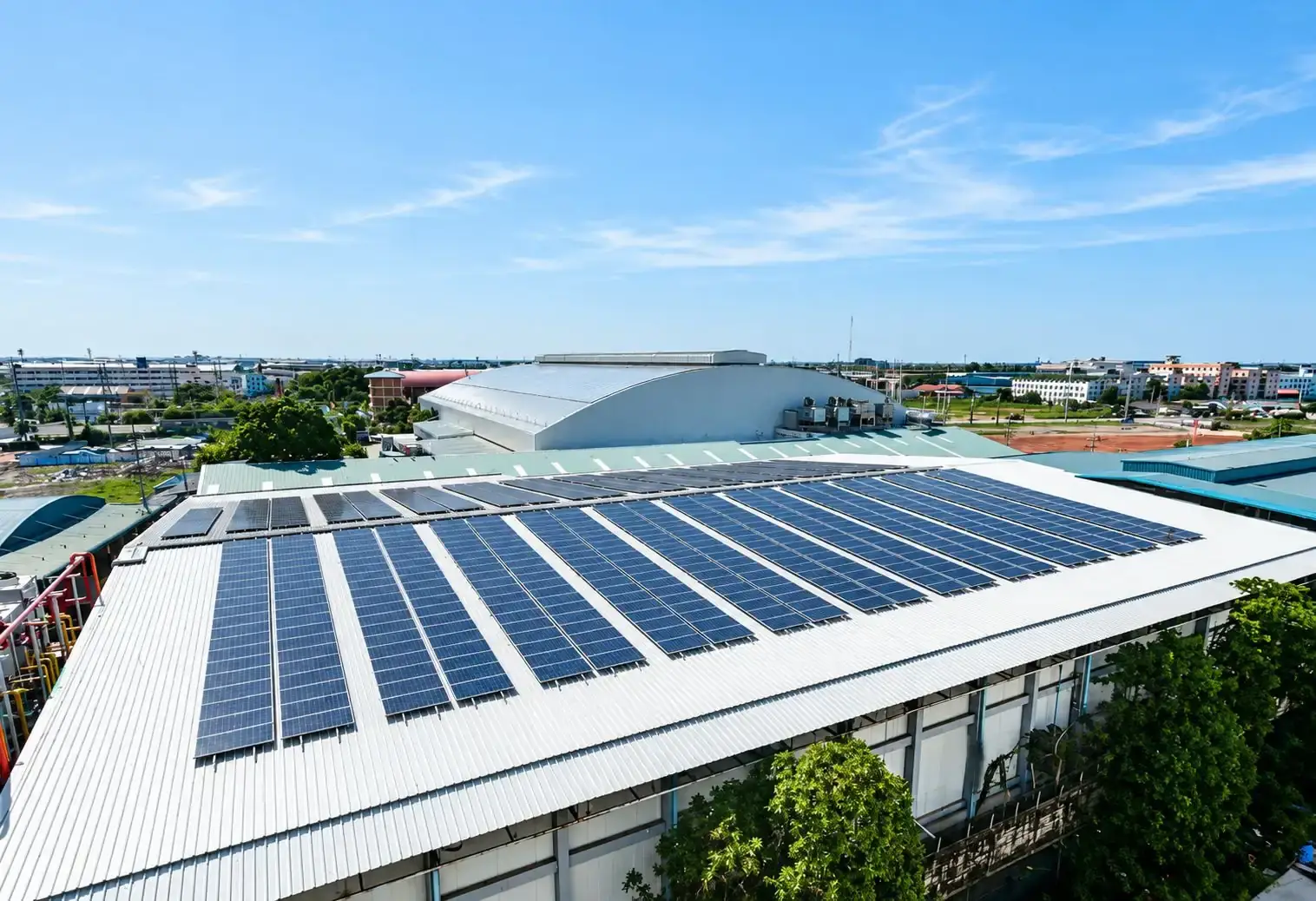
Solar panels planning permission commercial requirements work differently from the domestic rules, since businesses and non-domestic buildings fall under separate classes of permitted development rather than Class A or B. Many commercial and industrial properties do still benefit from permitted development rights for rooftop and, in some cases, ground mounted solar, but the specific limits on size, height and siting vary depending on the type of building and its planning history. Larger commercial roof arrays, warehouse and factory installations, and ground mounted commercial systems are more likely to need a planning application than a typical domestic rooftop project, partly due to their scale and partly because commercial sites are more likely to carry existing planning conditions or an Article 4 direction. Business owners considering commercial solar installations are well advised to check with their local planning authority early in the process, since the answer can depend heavily on the property’s history and current use class. Ongoing commercial solar maintenance is also worth planning for at the same time, since larger arrays benefit from a regular service schedule once they’re up and running.
Local Planning Authorities in the South of England
While the national permitted development framework applies consistently across England, individual councils can still interpret specific situations differently, particularly around conservation areas, Article 4 directions and listed buildings. South of England planning authorities including Portsmouth, Southampton, Winchester, Fareham, Gosport, Havant, Waterlooville, Petersfield, Basingstoke and Chichester each maintain their own conservation area boundaries and locally listed buildings, alongside the nationally listed properties recorded by Historic England. Smaller towns and villages across these council areas, from Denmead and Clanfield to Emsworth and Hayling Island, often sit partly or wholly within conservation areas even where the wider town does not. Checking your specific address against your council’s planning constraints map, available on most local authority websites, is a sensible first step before assuming permitted development rights apply.
How Solar Maintenance And Repairs Helps
Working out whether a specific property needs a planning application can be confusing, especially where a home sits in a conservation area, has a flat roof, or includes an unusual roof design. We advise on this during the free site survey, checking the property’s location, roof type, and any relevant planning history before recommending a system design. This means a homeowner or business unsure about legal requirements gets a clear answer specific to their property, rather than generic guidance that may not apply to their situation. Where a planning application or listed building consent does turn out to be necessary, our team can explain what that process typically involves so there are no surprises further into the project, whether the project also includes solar battery storage or a straightforward panels-only system.
Once your planning position is confirmed and your system is installed, keeping it running well matters just as much as getting the paperwork right at the start. That’s where ongoing solar panel maintenance, solar panel cleaning and, for homes near trees or open countryside, solar bird proofing come in. If anything does go wrong down the line, our solar panel repairs service is there to help, and if your property also has an existing solar thermal system, we offer solar thermal maintenance and solar thermal repairs alongside standard PV servicing.
Final Thoughts
For most UK homes, solar panels fall neatly within permitted development, meaning no planning application is needed before installation begins. The exceptions are worth taking seriously though, particularly for listed buildings, conservation areas, larger ground mounted systems, unusual roof designs and some commercial properties. Building Regulations sit alongside planning permission as a separate requirement, covering the structural and electrical safety of the installation regardless of whether a planning application was needed. If you’re still unsure whether do i need planning permission for solar panels applies to your specific property, Solar Maintenance And Repairs can help. Booking a free site survey is the most straightforward way to get a clear, property specific answer before committing to a project.