Solar panels sit outdoors year-round, so it’s no surprise they pick up dirt, pollen, bird droppings, and moss. Many owners wonder whether they should clean them and, if so, how to do so without damaging the panels or putting themselves at risk.
This article covers whether solar panels need cleaning, what you can safely do from the ground, what to avoid, and when it’s better to leave it to a professional solar panel cleaning service.
Do Solar Panels Need Cleaning?
Rain washes away some loose dirt, particularly on steeper roofs, but it doesn’t remove all of it. Bird droppings, moss, lichen, and a general film of grime often stay put, and panels with a shallow tilt or overhanging trees tend to collect more of it.
Dirt matters because it blocks some of the light reaching the cells, so a visibly dirty array can generate less than a clean one. If your system’s output has dipped and nothing else has changed, dirt is one of the first things to rule out, ideally alongside a review of your broader solar panel maintenance.
Before You Start: Safety First
Cleaning solar panels is not a job to rush. Before you do anything:
- Never go onto the roof or use ladders to reach the panels. Falls from height are a serious risk. Only clean what you can safely reach from the ground.
- Avoid cleaning in strong direct sun. Early morning, evening, or an overcast day is better, as panels can be hot in the sun.
- Keep water away from cables, connectors and the inverter.
- Check your installer’s or manufacturer’s guidance first. Some warranties set out how panels should be cleaned, and using the wrong method could affect your cover.
- Don’t clean damaged panels. If you can see cracked glass, loose or exposed wiring, or burn marks, leave them alone and call an engineer.
How to Clean Solar Panels Safely From the Ground
If your panels are within safe reach from the ground and your manufacturer’s guidance allows it:
- Note your generation first. Check your inverter display or monitoring app before cleaning, so you can see afterwards whether it made a difference.
- Rinse off loose dirt. Use a hose on a gentle, low-pressure setting to wash away dust and debris.
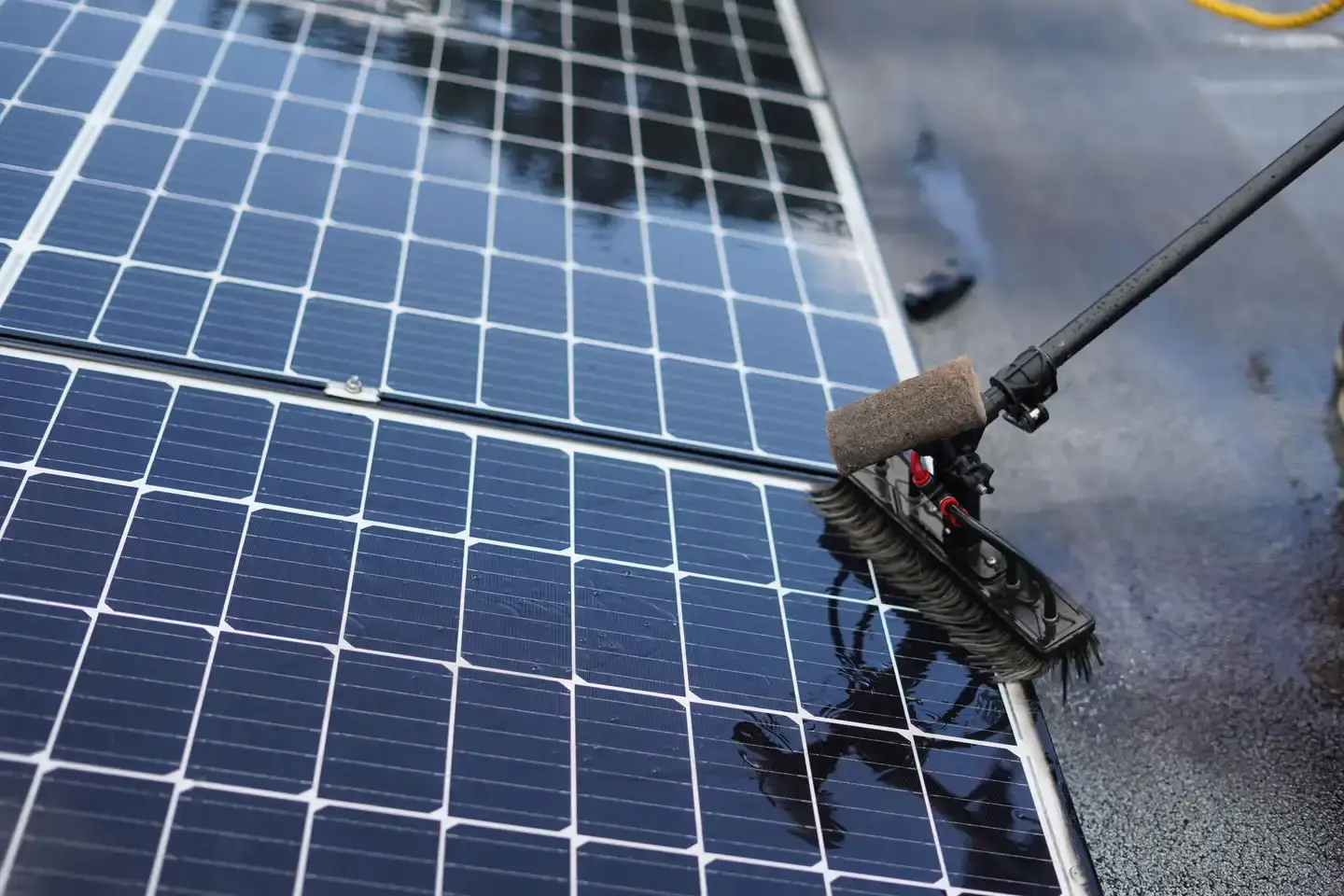
- Use a soft tool if needed. A soft sponge or soft-bristled brush on an extendable pole, with plain water, can lift stubborn film. Only use a small amount of mild, non-abrasive cleaner if the manufacturer permits it.
- Rinse thoroughly. Leftover soap can leave streaks and attract more dirt.
- Check your generation again over the next day or two.
Professional cleaners often use a water-fed pole system, which lets them clean panels from the ground without scrubbing the surface. It’s one reason many owners prefer to hand the job over.
What to Avoid
- Pressure washers. High pressure can force water past seals and damage the panels.
- Abrasive pads, scouring powders and harsh chemicals or solvents. These can scratch or degrade the glass surface and coatings.
- Scraping. Don’t pick or scrape at hardened droppings or moss with tools.
- Cleaning in direct midday sun. Water can dry too quickly and leave marks.
Bird Droppings and Moss
Bird droppings can dry hard and leave residue, and moss tends to grow along panel edges where water collects. Both can be awkward to remove safely from the ground.
If you’re seeing repeated droppings, it’s worth asking why. Birds that keep landing, roosting or nesting around your array will keep coming back, and cleaning won’t stop that. In that case, bird proofing addresses the cause rather than the symptom.
How Often Should You Clean Solar Panels?
There’s no single schedule that suits every system. How quickly panels get dirty depends on your roof pitch, nearby trees, local wildlife and how close you are to farmland, roads or the coast.
A practical approach is to keep an eye on your generation figures and check the panels visually from time to time. A professional servicing visit also gives you a regular opportunity to have the array inspected and cleaned.
When to Call a Professional
It’s usually best to bring in an engineer when:
- The panels are on a high, steep or awkward roof
- There’s heavy moss, lichen or a build-up of droppings
- Your warranty restricts how panels can be cleaned
- You’re not comfortable cleaning them safely yourself
- Output is still low after a clean. Dirt isn’t always the cause, and a drop in generation can point to a wiring issue or a fault with the solar inverter or panels, which needs a proper solar PV repair diagnosis.