
If you’ve heard pecking, scratching, or cooing noises coming from underneath your solar panels, you’re not imagining things — and it’s worth taking seriously. Birds, particularly pigeons, are drawn to the warm, sheltered gap between solar panels and your roof, and once they’ve moved in, they can be surprisingly difficult (and expensive) to remove.
In this guide, we’ll cover why birds are attracted to solar panels, what damage they can cause, and your options for keeping them out for good.
Why Do Bird’s Nest Under Solar Panels?
The space beneath a solar panel array is close to ideal from a bird’s perspective: it’s elevated, sheltered from rain and wind, warmed by the panels above, and largely hidden from predators. For pigeons especially, it ticks every box for a safe nesting site — and once one pair moves in, others tend to follow.
The Real Risks of Leaving It Unaddressed
This isn’t just a noise nuisance. Left unaddressed, birds nesting under your panels can lead to:
- Reduced energy output. Nesting material, feathers, and debris can build up around wiring and beneath panels, partially blocking airflow and, in some cases, affecting performance.
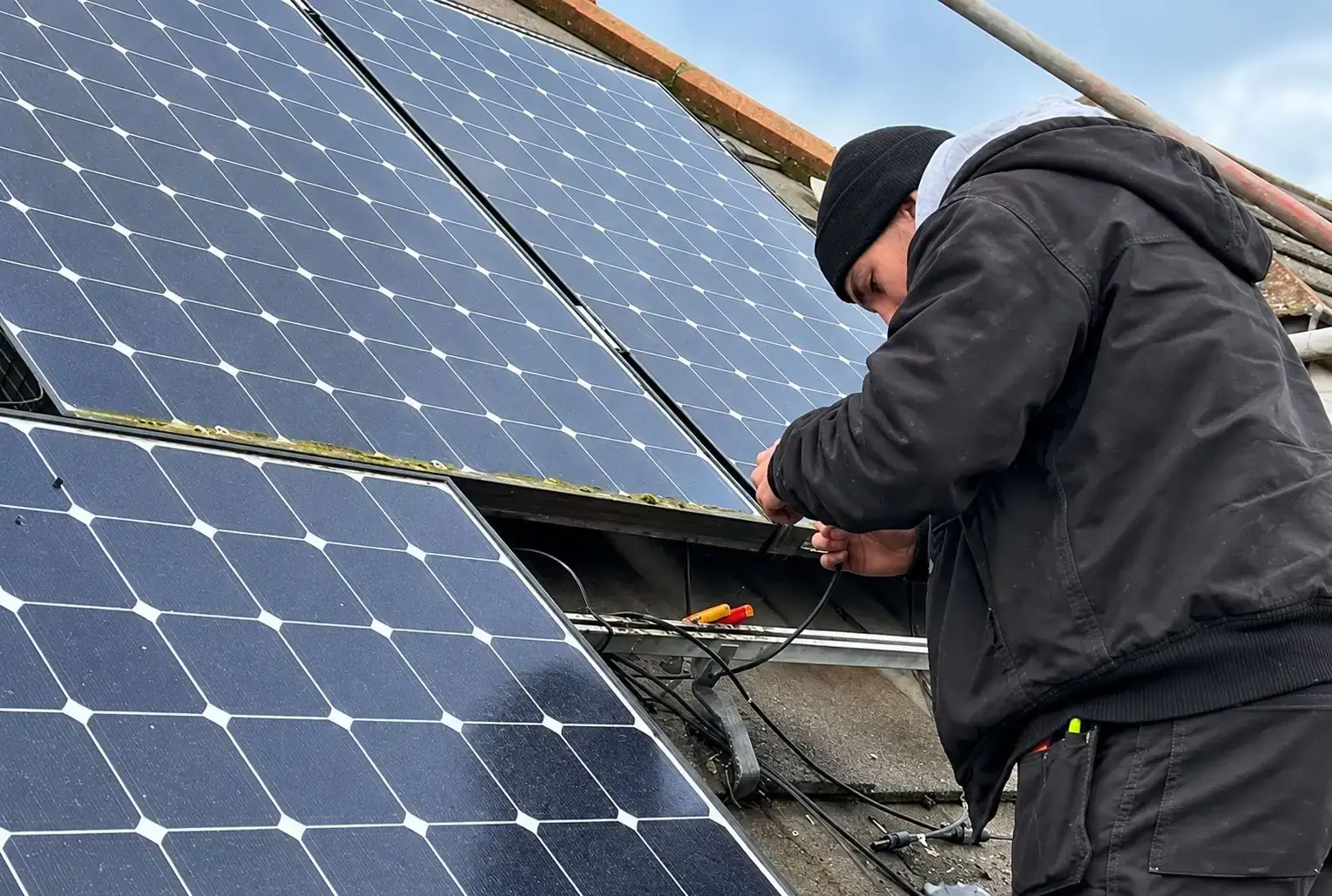
- Damaged wiring. Birds — and the mites and parasites that often come with nests — can chew through or corrode cabling, which is a genuine fire and safety risk, not just a performance issue.
- Blocked drainage and guttering. Nesting debris frequently ends up in guttering, leading to water pooling and potential roof damage over time.
- Costly clean-up. Bird droppings are acidic and, over time, can degrade roofing materials and panel frames, while an established nest can require professional removal rather than a simple cleanup.
- Increased maintenance needs. A system that’s been compromised by nesting activity often needs more frequent inspection and repair than one that’s properly protected from the outset.
Signs You May Already Have a Problem
You don’t always need to see a bird to know one’s there. Watch for:
- Scratching, cooing, or fluttering sounds from beneath the panels, especially early morning
- Droppings accumulating on the ground below the array or on the panels themselves
- Loose feathers or nesting material visible at the panel edges
- A sudden, unexplained dip in your system’s energy output — worth checking against your solar panel maintenance records if you have them
- Birds repeatedly perching on or around the edge of your panel array
How Bird Proofing Works
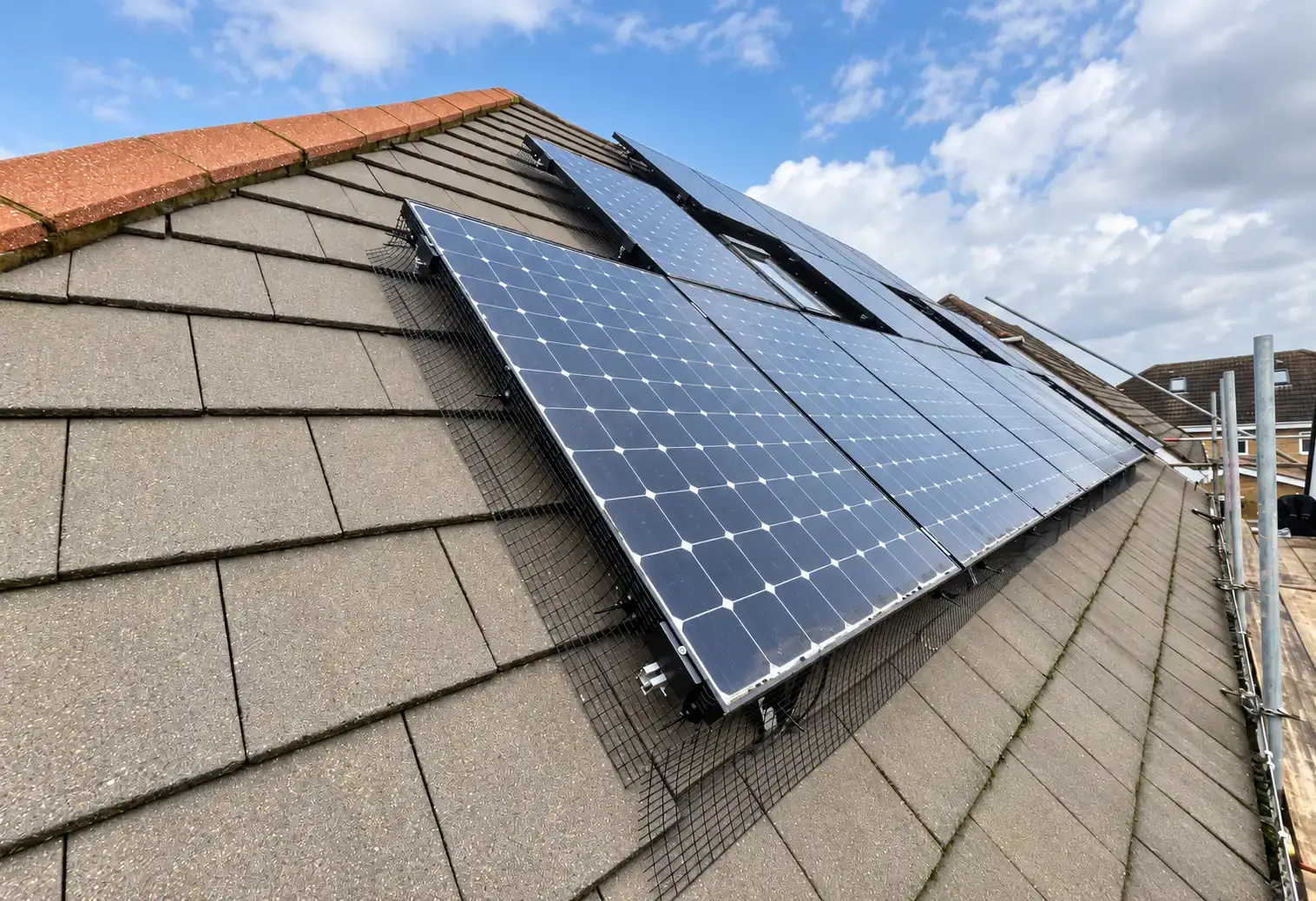
Proper bird-proofing doesn’t mean removing your panels — it means sealing the gap so birds can’t get underneath in the first place. The most common and effective method is:
- Mesh barriers, fitted securely around the perimeter of the panel array, blocking access to the space beneath while still allowing normal airflow for the panels to run efficiently
- Anti-roosting measures on any exposed ledges or mounting points where birds might try to perch instead
- A check of existing solar inverter wiring and connections nearby, since this is often where bird-related damage does the costliest harm if it’s gone unnoticed
- Done properly, this is a one-time job — it doesn’t need to be repeated every year the way cleaning does, and it protects your system for the long term rather than just addressing a symptom.
Is It Worth It?
Compared to the cost of an emergency wiring repair, a full nest removal, or lost energy output over a season, solar panel bird proofing is a genuinely low-cost way to protect a system that likely cost several thousand pounds to install. It’s also far easier — and kinder — to prevent birds from nesting in the first place than to deal with an established colony later, since nest removal has to be handled carefully and, depending on the species and time of year, may be subject to legal protections.
Frequently Asked Questions
Will bird proofing affect how my solar panels perform?
No. A properly fitted mesh barrier is designed to allow normal airflow beneath the panels, which is important for keeping them running efficiently — it simply blocks birds from getting underneath.
Can I remove a bird’s nest myself?
It’s not always straightforward. Depending on the species and the time of year, nests may be subject to legal protections, and removal often requires careful attention to avoid damaging your panels or wiring. It’s usually safer and quicker to have this handled professionally.
How do I know if birds have already damaged my wiring?
The clearest sign is a drop in energy output, accompanied by evidence of nesting activity. A full inspection can confirm whether any cabling needs repair as part of the bird proofing installation.
How long does bird proofing take to install?
For most residential systems, fitting mesh barriers is usually completed within a single visit.
Protect Your System Today
If you’ve noticed any of the warning signs above or simply want to get ahead of the problem before nesting season, our team can fit a proper mesh barrier system that keeps birds out without affecting your panels’ performance. Call us anytime, email us at info@