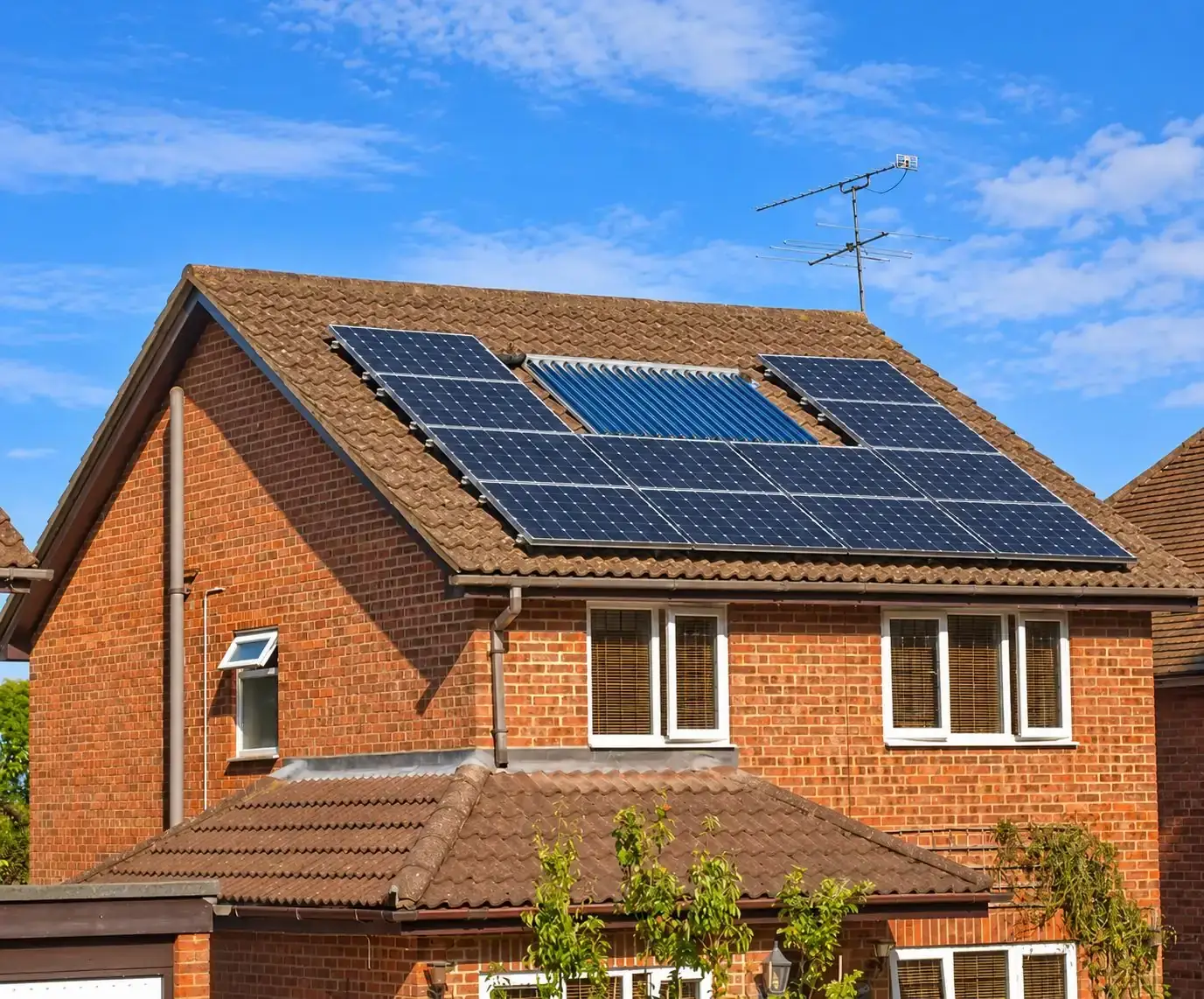
How to choose a solar thermal system UK homeowners can rely on comes down to five practical factors: roof orientation and pitch, household hot water demand, available budget, property size, and installation quality. Get these right and a system should perform reliably for decades. Get them wrong, and even good equipment can underperform. A professional survey is the most reliable way to confirm the most suitable system for your specific property, rather than relying on generic sizing guidance alone.
Why Selecting the Right Solar Thermal System Matters
The system you settle on affects far more than the installation day itself. A correctly sized, well positioned system delivers long-term savings on water heating costs year after year, while an undersized or poorly sited one can leave a household topping up with an immersion heater far more often than expected. Performance and reliability go hand in hand with the initial decision too. Collectors matched sensibly to the roof and to household demand tend to run more efficiently and put less strain on the pump and cylinder over time. Future maintenance is easier to plan for as well, since a well specified system with accessible components tends to need less intervention than one squeezed awkwardly into an unsuitable space. Property suitability, covering everything from roof pitch to available loft space for the cylinder, ultimately determines which of the available options will actually work well on your home.
Understanding the Different Types of Solar Thermal Systems
UK solar thermal installations are almost always built around one of two collector technologies, each with a distinct set of strengths.
Flat Plate Collectors
Flat plate collectors consist of a dark absorber plate under a glass cover, mounted in an insulated frame. Their main advantage is cost, since they’re generally the more affordable option for a given collector area, and they perform very well during the warmer, brighter months when demand for supplementary heating is lower anyway. Limitations become more noticeable in colder or overcast conditions, where flat plate collectors lose some efficiency compared with evacuated tube systems. They also tend to need a slightly larger roof area to deliver the same output. Flat plate collectors suit properties with generous, unshaded roof space and homeowners prioritising lower upfront costs over maximum winter performance.
Evacuated Tube Collectors
Evacuated tube collectors use a series of glass tubes, each containing an absorber surrounded by a vacuum, which significantly reduces heat loss compared with a flat plate design. This gives them a clear advantage in cold weather performance, since the vacuum insulation keeps more of the captured heat where it’s needed even on cooler days. Installation considerations differ slightly too. Evacuated tubes are generally more compact for a given output, which suits roofs with less available space, though the higher unit cost means the overall installation price is often higher for a comparable hot water contribution. They’re a sensible option for households wanting stronger performance through the shoulder seasons and into winter, where flat plate systems tend to fall away more noticeably.
Which Collector Is Right for Your Home?
| Factor | Flat Plate Collectors | Evacuated Tube Collectors |
|---|---|---|
| Typical cost | Lower cost per unit of output | Higher cost per unit of output |
| Roof space needed | Larger area for equivalent output | More compact for equivalent output |
| Cold weather performance | Reduced efficiency in cold or overcast conditions | Stronger performance in cold conditions |
| Best suited to | Larger, unshaded roofs, cost conscious buyers | Smaller roofs, buyers prioritising winter performance |
| Maintenance | Straightforward, well established | Straightforward, slightly more specialist components |
Selecting the Best Solar Thermal System for the UK Climate
Solar thermal system for UK climate conditions needs to account for a mix of relatively low winter sun angles, frequent cloud cover, and a shorter heating season compared with southern Europe, where much of this technology was originally developed. The best solar thermal system UK households can realistically expect strong results from is one specified with these seasonal patterns in mind rather than assuming peak summer performance year round. Seasonal performance naturally favours the summer months, when longer daylight hours and a higher sun angle mean collectors can often meet most or all of a household’s hot water demand without any backup heating. Winter efficiency drops considerably, and even a well specified system will usually need supplementary heating, whether from a boiler or immersion heater, during the coldest months. Regional considerations matter too. Coastal areas across Hampshire and the South of England generally see more sunshine hours annually than parts of northern England and Scotland, which can influence how much of a household’s annual hot water demand solar thermal realistically covers.
Choosing the Correct System Size
Getting the size right matters more than almost any other decision in the buying process, since an undersized system will constantly need topping up, while an oversized one adds cost without a proportional benefit. Household hot water demand is the starting point, and this depends heavily on the number of occupants and their typical usage patterns. Daily hot water demand naturally scales with household size, though usage habits, such as bath versus shower preference, also make a real difference. Cylinder capacity needs to be matched to that demand, since an undersized cylinder can’t store enough solar heated water to see a household through periods without direct sun. Collector size then follows from both of these figures, alongside available roof space. It’s also worth accounting for future household changes, such as a growing family or a planned extension, when deciding on cylinder capacity in particular, since upsizing later is far more disruptive than specifying correctly from the outset.
| Household Size | Typical Cylinder Capacity | Typical Collector Area |
|---|---|---|
| 1 to 2 people | Around 150 to 180 litres | Approximately 2 to 3 square metres |
| 3 to 4 people | Around 200 to 250 litres | Approximately 3 to 4 square metres |
| 5+ people | Around 250 to 300 litres or more | Approximately 4 to 6 square metres |
These figures are general starting points rather than fixed rules, and a proper solar thermal collector size calculator assessment carried out during a site visit will always account for your specific roof, hot water habits and appliance setup.
Roof Suitability and Installation Requirements
Roof orientation and pitch have a major bearing on how much a solar thermal system can realistically achieve. A south facing roof at a pitch of roughly 30 to 45 degrees tends to give the strongest year round performance, though south east and south west facing roofs still perform well and remain entirely viable. Shading from nearby trees, chimneys or neighbouring buildings can meaningfully reduce output, particularly during the lower sun angles of autumn and winter, so a survey should always assess shading patterns across the full day rather than a single snapshot. Roof condition matters just as much as orientation. An ageing roof covering may need attention before collectors are fitted, since remedial work becomes considerably more disruptive once panels are already in place. Structural suitability, covering the roof’s ability to carry the additional weight of collectors and mounting brackets, should always be confirmed before installation, and available roof space needs to comfortably accommodate the collector area identified during sizing, with room to spare for maintenance access.
Solar Thermal vs Solar PV for Hot Water
Solar thermal vs solar PV for hot water is one of the most common questions homeowners ask when comparing renewable options, since both can contribute to a household’s hot water needs but work in very different ways.
| Factor | Solar Thermal | Solar PV |
|---|---|---|
| Purpose | Heats water directly | Generates electricity, which can power an immersion heater or heat pump |
| Efficiency for hot water | Generally more efficient at converting sunlight into heat | Less efficient for hot water specifically, since electricity generation and conversion both involve losses |
| Electricity generation | None | Yes, can also power other household appliances |
| Hot water production | Direct and consistent in sunny conditions | Indirect, depends on available surplus electricity |
| Maintenance | Fluid checks, pump servicing, cylinder inspection | Generally lower maintenance, mainly inverter and panel checks |
| Running costs | Low once installed, occasional servicing | Low once installed, benefits from export tariffs if generating surplus electricity |
Neither option is universally better. Solar thermal tends to be the more efficient choice specifically for hot water, while solar PV installation offers broader flexibility since the electricity generated can be used anywhere in the home, not just for heating water. Some households ultimately install both, using PV generation for general electricity needs and solar thermal specifically for hot water.
Understanding Installation Costs
Solar thermal installation cost UK figures vary considerably depending on several factors, so it’s worth understanding what actually drives the price up or down. Property size and the resulting system size are the biggest factors, since a larger household needing a bigger cylinder and more collector area will naturally cost more to fit than a compact system for a small property. Collector type plays a role too, with evacuated tube systems generally costing more than flat plate systems of a similar output, reflecting their more complex construction. Labour costs depend on the complexity of the installation, including roof access, pipe run length between the collectors and cylinder, and whether an existing cylinder needs replacing to accommodate a solar coil. Additional equipment, such as a new cylinder, controller or pump, can add to the overall cost where an existing hot water system isn’t compatible with solar thermal. Maintenance costs, while modest compared with the initial installation, should be factored into your overall budget and payback period calculations, since regular servicing protects the investment and keeps the system running efficiently for its full expected lifespan.
Grants and Funding Available in the UK
Solar thermal grants and funding UK support has changed over the years, and current schemes vary depending on your location, property type and circumstances. Rather than listing specific figures that may change, the most reliable approach is checking directly with government sources or your local authority for current eligibility and funding levels available at the time you’re planning your installation. Some schemes focus on income based eligibility, others on property type or existing heating system, and criteria are reviewed periodically. Financial considerations should always include the full picture, comparing installation cost against realistic long-term savings on water heating, rather than relying on the availability of a grant to make a system financially worthwhile.
How to Select the Right Installer
Qualifications matter enormously when deciding who fits your system. Working with a qualified solar thermal installer means the installation meets recognised industry standards for both the equipment and the fitting work itself, which also affects your ability to access relevant grants or schemes later. Servicing and aftercare arrangements are worth asking about before committing, since a system that’s easy to get serviced regularly will perform more reliably over its lifespan than one left without ongoing support. Independent, unbiased buying advice, from an installer who’s willing to explain trade-offs honestly rather than pushing the most expensive option, is one of the clearest signs you’re dealing with a reputable company. Our team provides exactly this kind of guidance as part of every solar thermal system installation consultation, and we support systems afterwards through solar thermal maintenance and solar thermal repair services rather than disappearing after the install van leaves.
Local Solar Thermal Specialists Across Hampshire
Solar Maintenance And Repairs supports homeowners deciding on, installing, and maintaining solar thermal systems throughout Hampshire, including Portsmouth, Southsea, Fareham, Gosport, Havant, Waterlooville, Petersfield, Emsworth, Hayling Island, Horndean, Denmead, Cowplain, Clanfield, Drayton and Cosham. Local knowledge of the area’s typical roof types and orientations, from period terraces in Southsea to newer builds around Waterlooville and Denmead, helps our engineers give accurate, property specific advice during a survey rather than generic guidance that may not reflect your actual roof. If your household also has an interest in electricity generation alongside hot water, our solar panel installation and solar battery storage services cover that side of a renewable energy setup too, and our solar panel maintenance and solar panel repairs teams keep everything running once installed.